Xijia Zhao —
‘Memory Is Not Perishable Waste (unframed)’
Add to cart
About Xijia Zhao
'My practice centres on image, memory, and emotion. Through different objects, forms, materials, and relationships between images, I construct a sense of memory rather than depicting specific events or personal recollections. For me, the objects within my images function as abstract analogies. Through their textures, states, and combinations, they collectively form my understanding and experience of memory. Working across printmaking and painting, I am interested in how the process of mak-ing an image can correspond to the ways we process memory and emotion. Different materials and processes not only shape the visual qualities of the work, but also allow me to consider preservation, reconstruction, idealisation, and emotional residue in different ways.'
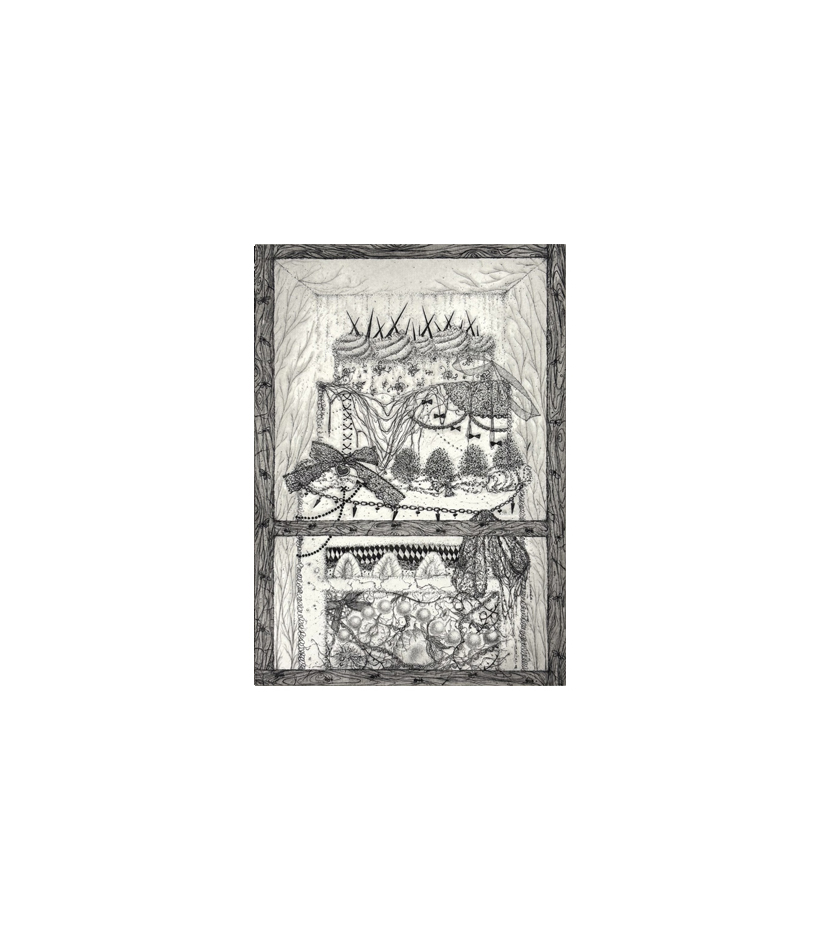
'Memory Is Not Perishable Waste is a hard ground etching that is not simply a depic-tion of objects, but an exploration of the way memory is constructed. Through meticu-lous engraving, I recreate the textures of plastic, fabric, and metal, reflecting the pro-cess of repeatedly revisiting, refining, and assigning meaning to the past. The cake, an object inherently prone to decay, contrasts with this careful act of preservation, allowing the title to read as a stubborn assertion that memory can resist the passage of time.'
'Memory Is Non-Perishable Waste extends this enquiry by questioning the act of preservation itself. Memories are rooted in things that genuinely happened, yet gradu-ally lose their original function, like preserved specimens that remain intact but no longer possess life. By directly imprinting materials such as lace onto the plate, I allow physical traces to become part of the image, considering memory as something that does not decay, yet loses its use and persists as emotional residue.'
Xijia Zhao October 2026